

A Community Perspective Inspired by Negus Pleeze, Community Activist
“Damn near $6.50 for a gallon of gas, $100 for one bag of groceries! I think we’re screwed. Sadly, even a blind man can see this shit.” — Negus Pleeze, Community Activist
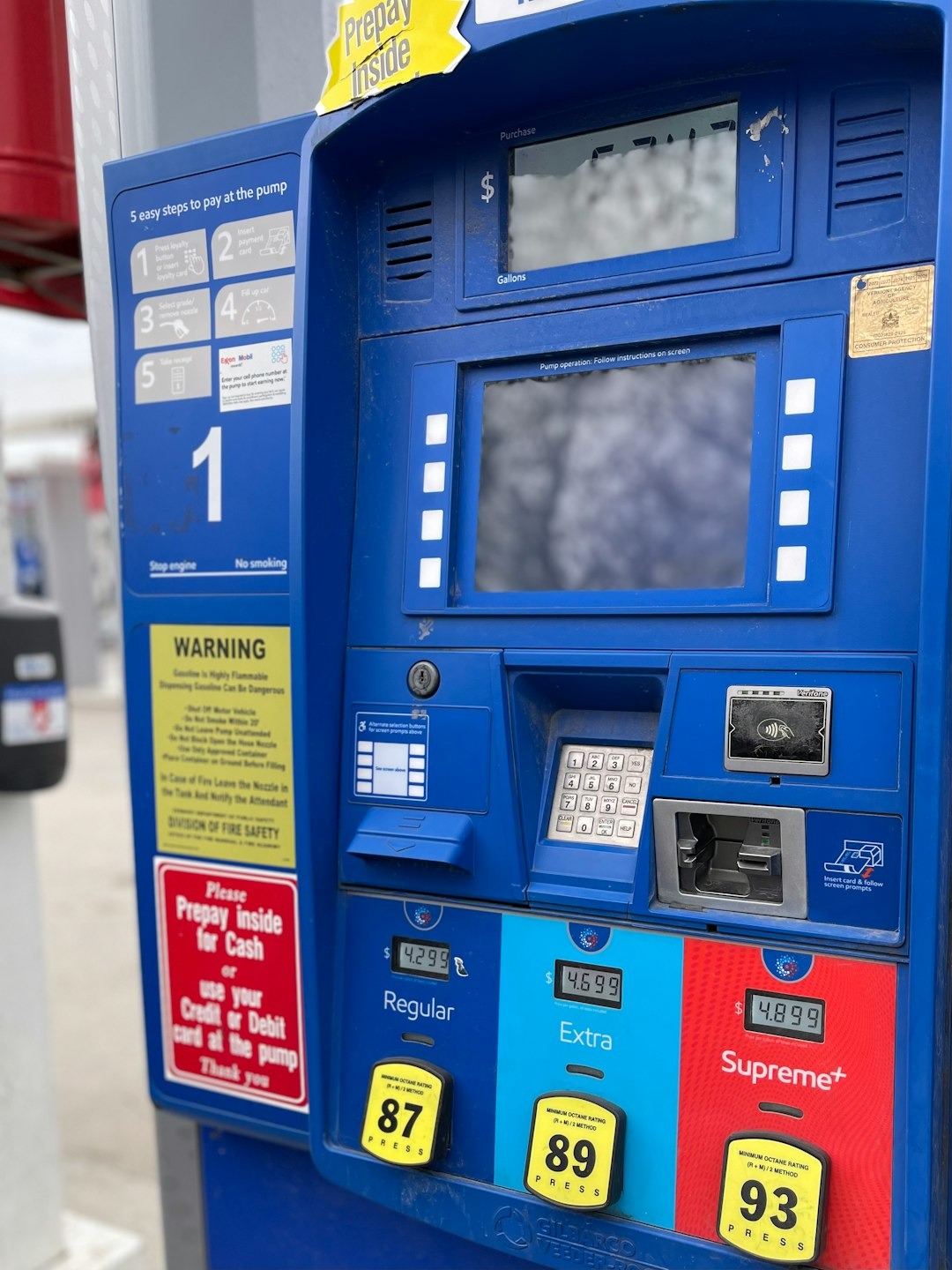
He doesn’t drive. He walks with a cane through the streets of America’s busiest cities. And yet Negus Pleeze — blind community activist, truth-teller, voice of the people — feels every spike at the gas pump the same way the rest of us do. Because high gas prices don’t stay at the gas station. They follow you home. They sit at your dinner table. They show up in the price of everything you buy, everywhere you go.
Almost $6.50 for a gallon of gas. A hundred dollars for a single bag of groceries. These are not statistics from a policy report. These are the lived realities of millions of working Americans, and they are not accidents. They are the product of decisions — made by corporations, governments, cartels, and financial institutions — that ordinary people had no seat at the table to influence.
This post is about understanding why gas prices are so high, who benefits from keeping them that way, and what every American can do — right now, today — to push back.
Part One: Why Is Gas So Expensive?
Gas prices are not set by one force. They are the product of a complex, interlocking system of global markets, political decisions, corporate behavior, and domestic policy — and understanding each layer is the first step toward refusing to be helpless about it.
1. The Global Oil Market: OPEC+ and the Cartel Problem
Roughly 40% of the world’s crude oil supply is controlled by OPEC+ — the Organization of Petroleum Exporting Countries and its allies, led primarily by Saudi Arabia and Russia. This is a cartel in the most literal sense: a group of powerful nations that collude to control the global supply of oil, and by extension, the price. When OPEC+ wants prices to rise, they cut production. Less supply on the global market means prices go up at the pump — in California, in Texas, in Georgia, in every state in America. In 2022, OPEC+ cut production by 2 million barrels per day, a move analysts described as a deliberate political choice as much as an economic one, enacted during a period when Russia — a key OPEC+ partner — was under Western sanctions for its invasion of Ukraine.
The result? American consumers paid more at the pump, partially to compensate for a geopolitical standoff that had nothing to do with them.

2. The War in Ukraine and Global Energy Disruption
Russia is one of the world’s three largest oil producers and its second-largest natural gas exporter. When Russia invaded Ukraine in February 2022, the United States and its European allies responded with sweeping economic sanctions — including restrictions on Russian energy exports.
This sent shockwaves through the global energy market. Countries that had depended heavily on Russian oil and gas suddenly had to find new suppliers. Competition for remaining global supply intensified. Prices spiked.
This is the uncomfortable geometry of global energy dependence: a war fought on the other side of the planet raises the price of driving to work in Cleveland. And the people least able to absorb that cost — working-class Americans who commute long distances in older vehicles with no public transit option — pay the steepest price.
3. Oil Company Profits: The Price-Gouging Question
Here is a number worth sitting with: In 2022, the five largest Western oil companies — ExxonMobil, Shell, BP, Chevron, and TotalEnergies — collectively reported over $200 billion in profits. That is the single most profitable year in the history of the oil industry.
This happened at the exact same moment that American families were paying the highest gas prices in a generation.
Were oil companies simply passing along their own elevated costs to consumers, or were they using the cover of global instability to pad their margins? The data suggests the latter. A 2022 White House analysis found that oil company profit margins expanded significantly during the price spike — meaning companies were not merely recovering their costs but actively profiting from the crisis.
President Biden publicly called this “war profiteering.” Others called it price gouging. The oil industry called it the free market. Whatever you call it, the result was the same: the cost was transferred from corporate balance sheets to the gas tanks of ordinary Americans.
4. Domestic Refining Capacity
Even when crude oil prices fall, gas prices at the pump don’t always follow — and one major reason is America’s aging and shrinking oil refinery infrastructure.
During the COVID-19 pandemic, several American refineries closed or significantly reduced capacity because demand for gasoline collapsed as people stopped driving. When demand rebounded sharply in 2021 and 2022, refining capacity had not fully recovered. The bottleneck between crude oil and gasoline kept prices elevated even when crude prices moderated.
The United States has not built a major new oil refinery since 1977. The existing refineries are aging, regionally concentrated, and vulnerable to disruptions — whether from hurricanes in the Gulf Coast, mechanical failures, or the simple economics of a system that has been under invested for decades.
5. The California Premium: Why Some States Pay More
If you are in California, you already know: you pay more. Significantly more. While the national average for regular gasoline hovers around $3.50–$4.00 per gallon in normal periods, California regularly sees prices $1.50–$2.50 higher — and in peak periods, prices approaching or exceeding $6.50 per gallon, exactly the number Negus Pleeze called out.
Why? Several compounding factors:
- State taxes: California has the highest gas tax in the nation — approximately 68 cents per gallon in state and local taxes, compared to a national average of about 31 cents.
- Unique fuel blend: California requires a special low-emissions fuel blend that can only be produced at a handful of refineries, creating a captive market with limited supply flexibility.
- Refinery outages: When one of California’s few refineries goes down for maintenance or an emergency, the entire state feels the supply shock.
- Geographic isolation: California cannot easily import fuel from neighboring states that use a different blend.
These are structural features, not random events — meaning Californians are paying a systemic premium every single time they fill their tanks.
6. Speculation and Financial Markets
A portion of the price you pay at the pump has nothing to do with the physical supply and demand for oil. It reflects the activity of financial speculators — hedge funds, investment banks, and commodities traders who buy and sell oil futures contracts on exchanges like the New York Mercantile Exchange.
When speculators anticipate disruption — war, political instability, a hurricane threatening Gulf Coast refineries — they bid up the price of oil futures. This speculative premium flows directly into the price at the pump. Critics argue that excessive financial speculation can add 20–30 cents per gallon to gas prices even when physical supply and demand don’t justify the increase.
In other words: Wall Street’s bets affect what you pay at the pump, even if you’ve never traded a single stock.
7. The Chain Reaction: Gas Prices and Grocery Prices
Negus Pleeze didn’t just call out gas prices. He called out groceries too — $100 for a single bag. And the connection is direct.
Every product on a grocery store shelf had to get there somehow. Trucks run on diesel fuel. When diesel prices rise, transportation costs rise. When transportation costs rise, food prices rise. This is called cost-push inflation — when the rising cost of inputs (like fuel) pushes up the price of everything downstream.
During the 2022 gas price spike: – Diesel prices rose to over $5 per gallon nationally — the highest ever recorded. – Trucking companies passed those costs on to distributors. – Distributors passed them on to retailers. – Retailers passed them on to consumers. – And at the end of that chain stood a grandmother at a grocery store in Oakland, trying to figure out how to feed her family with $100 — and coming up short.
Part Two: Who Benefits — and Who Gets Hurt
It is important to be clear about the asymmetry here.
Who benefits from high gas prices: – Major oil corporations (record profits) – Oil-producing nations (higher revenue per barrel) – Financial speculators who bet correctly on rising prices – Domestic shale oil producers (higher prices make expensive extraction profitable)
Who gets hurt: – Working-class commuters, especially those with no access to public transit – Low-income families who spend a higher percentage of their income on fuel and food – Small business owners whose operating costs rise with fuel prices – Communities of color, who are statistically more likely to live in areas with limited transit alternatives and older, less fuel-efficient vehicles – Farmers, who depend on fuel to plant and harvest food — costs that eventually land on grocery shelves
This is not a random distribution of pain. The burden of high gas prices falls disproportionately on the people who can least afford it and who have the least political power to change it.
Part Three: What You Can Actually Do About It
The system that produces high gas prices is large, global, and deeply entrenched. But ordinary people are not powerless. Here is a practical, realistic rundown of what can actually help.
What You Can Do Right Now
1. Shop for the lowest gas price in your area. Apps like GasBuddy, Waze, and Google Maps show real-time prices at stations near you. In dense areas, there can be 20–40 cent per gallon differences between stations just blocks apart. On a 15-gallon fill-up, that’s $3–$6 saved every time.
2. Use warehouse club gas stations. Costco, Sam’s Club, and BJ’s Wholesale typically sell gas 10–30 cents per gallon below market rate. If you fill up once a week, a membership pays for itself quickly.
3. Adjust your driving habits. – Slow down: gas mileage drops significantly above 60 mph. – Accelerate and brake gradually — aggressive driving can reduce fuel efficiency by 15–30%. – Keep your tires properly inflated (under-inflated tires reduce mileage). – Remove unnecessary weight from your vehicle. – Combine errands into single trips to reduce total miles driven.
4. Use gas rewards programs and credit cards. Many grocery chains, pharmacies, and gas stations offer points or cents-per-gallon discounts for loyalty members. Some credit cards offer 3–5% cash back on gas purchases. These aren’t windfalls, but they add up.
5. Reduce discretionary driving. Work from home days, carpooling, biking for short trips, and consolidating weekly errands can meaningfully reduce how often you’re at the pump.
Medium-Term: Reduce Your Fuel Dependence
6. Consider a more fuel-efficient vehicle. If you are in the market for a car, this is the moment to think seriously about fuel economy. Hybrids (which don’t require charging infrastructure) offer 40–55 mpg and pay for the price premium in fuel savings over time. A car getting 45 mpg instead of 20 mpg cuts your fuel costs by more than half at any price.
7. Explore electric vehicles. The federal government currently offers up to $7,500 in tax credits for the purchase of a new electric vehicle, and up to $4,000 for a used EV. States like California, New York, and Colorado offer additional incentives. If you drive significant annual mileage, an EV’s fuel cost savings — electricity is far cheaper per mile than gasoline — can be dramatic.
8. Use public transit wherever it exists. In cities with functional transit systems, leaving the car behind even two days a week can meaningfully reduce fuel spending. It also reduces traffic, pollution, and the collective dependence on oil that drives up prices for everyone.
Long-Term: Political Action and Systemic Change
Here is where Negus Pleeze’s message hits hardest. Because individual choices matter — but they don’t fix a rigged system. Only collective political action does that.
9. Support windfall profit taxes on oil companies. Several countries — including the UK — have implemented windfall profit taxes on oil companies during periods of exceptional profits. These taxes recapture a portion of extraordinary gains and can be used to offset the costs borne by working people. Pressure your Congressional representatives to support this legislation.
10. Demand investment in public transit. Cities with robust public transit systems give their residents a choice. Cities without them hold people captive to gas prices. Advocate at the local and state level for expanded bus, rail, and bike infrastructure.
11. Support clean energy investment. The long-term solution to gasoline price volatility is reducing America’s dependence on oil altogether. This means supporting investment in solar, wind, and battery storage — not because of abstract climate concerns alone, but for the very concrete economic reason that energy produced domestically from wind and sun is not subject to OPEC decisions, Russian geopolitics, or Wall Street speculation.
12. Vote and engage on energy policy. Gas prices are shaped by policy decisions at every level of government. State gas taxes, refinery regulations, vehicle emissions standards, public transit funding — these are all political questions with real-world answers. The people making those decisions are elected by you.
13. Push back against price gouging. Contact your state attorney general’s office when you see evidence of price gouging — coordinated price spikes that outpace cost increases. Several states have price gouging laws that can be activated during declared emergencies. These laws only work if someone calls it out.
Part Four: The Bigger Picture
There is a reason Negus Pleeze delivers this message walking. He has no car. He cannot drive. And yet he feels every ripple of high gas prices in the cost of the food he buys, the bus fare he pays, the delivery fees charged to businesses in his neighborhood, the extra stress visible on the faces of people he passes on the street.
Gas prices are not an abstract economic indicator. They are a daily referendum on who this economy is working for — and who it is working against.
When a gallon of gas costs $6.50, a family driving 1,000 miles a month in a 25-mpg car is spending over $260 a month just on fuel. That is money not going to rent, not going to groceries, not going to a child’s school supplies, not going to savings, not going to healthcare.
When a bag of groceries costs $100, the people who run out of money before they run out of list are not being irresponsible. They are being crushed by a system that extracted the maximum possible value from a crisis while offering them almost nothing in return.
Negus Pleeze says: “I think we’re screwed.” But he keeps walking. He keeps talking. He keeps naming what he sees — because naming it is the beginning of changing it.
He is right that the situation is dire. He is also right that even a blind man can see it. Which means the rest of us — with our full sight, our votes, our dollars, our voices, and our communities — have absolutely no excuse to look away.
Conclusion: Eyes Open at the Pump
The next time you pull up to a gas station and wince at the price on the sign, remember: that number is not inevitable. It is not a law of nature. It is the result of decisions made by people — and it can be changed by people.
Buy smarter. Drive smarter. Vote smarter. And when you see prices spike while oil companies post record profits, say exactly what Negus Pleeze said:
Even a blind man can see this shit.
Negus Pleeze is a community activist, storyteller, and voice for the voiceless. Follow his journey and join the conversation.
Tags: Gas Prices | Inflation | Economic Justice | OPEC | Oil Companies | Cost of Living | Consumer Tips | Community Activism | Negus Pleeze